Fall Nail Art Ideas Beyond the Basics
Why Fall Nail Art Deserves a Rethink
Autumn nail art has spent years in a seasonal loop. Pumpkins, leaves, plaid. These things are not bad, but they are predictable. If you have ever felt limited by what you assume fall nail art looks like, this is the season to push past those assumptions.
The nail art trends arriving this fall are rooted in real artistry rather than seasonal kitsch. They borrow from fine art, fashion illustration, and textile design. The result is a collection of approaches that feel genuinely sophisticated, deeply autumnal, and entirely wearable for people who take their nails seriously. Going beyond the basics does not mean going into complexity for its own sake. It means choosing art that has genuine visual intelligence behind it.
Fall Nail Art Ideas That Go Beyond the Expected
1. Abstract Ink Wash

Inspired by watercolor painting and Japanese ink wash art, this technique involves layering thin washes of deep autumn colors across the nail to create a soft, blended effect with visible brushstrokes. Think burgundy bleeding into plum, or rust fading into forest green. No hard lines, no defined shapes. The beauty is in the movement and the deliberate imperfection. This works especially well on longer nails where there is more canvas to work with.
2. Tortoiseshell in Autumn Tones
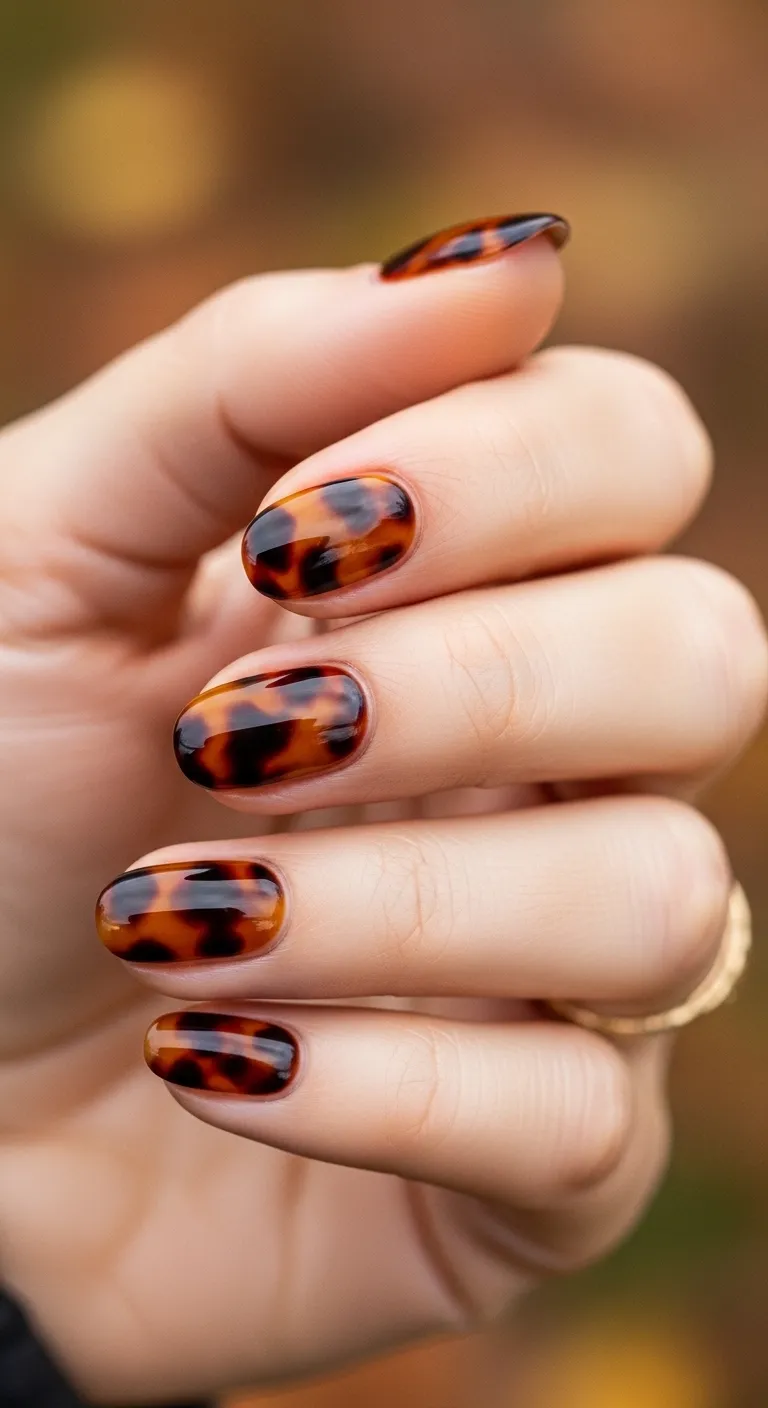
Tortoiseshell nail art has been popular for some time but the fall-specific version shifts the palette toward amber, burnt sienna, deep brown, and cognac. The swirled pattern feels organic and warm, evoking both the season and a certain vintage elegance. A high-gloss finish is essential for this look because the depth of the shell pattern only fully reveals itself with shine. Each nail in a tortoiseshell set is slightly different, which makes the overall effect feel artisan rather than repetitive.
3. Botanical Line Art
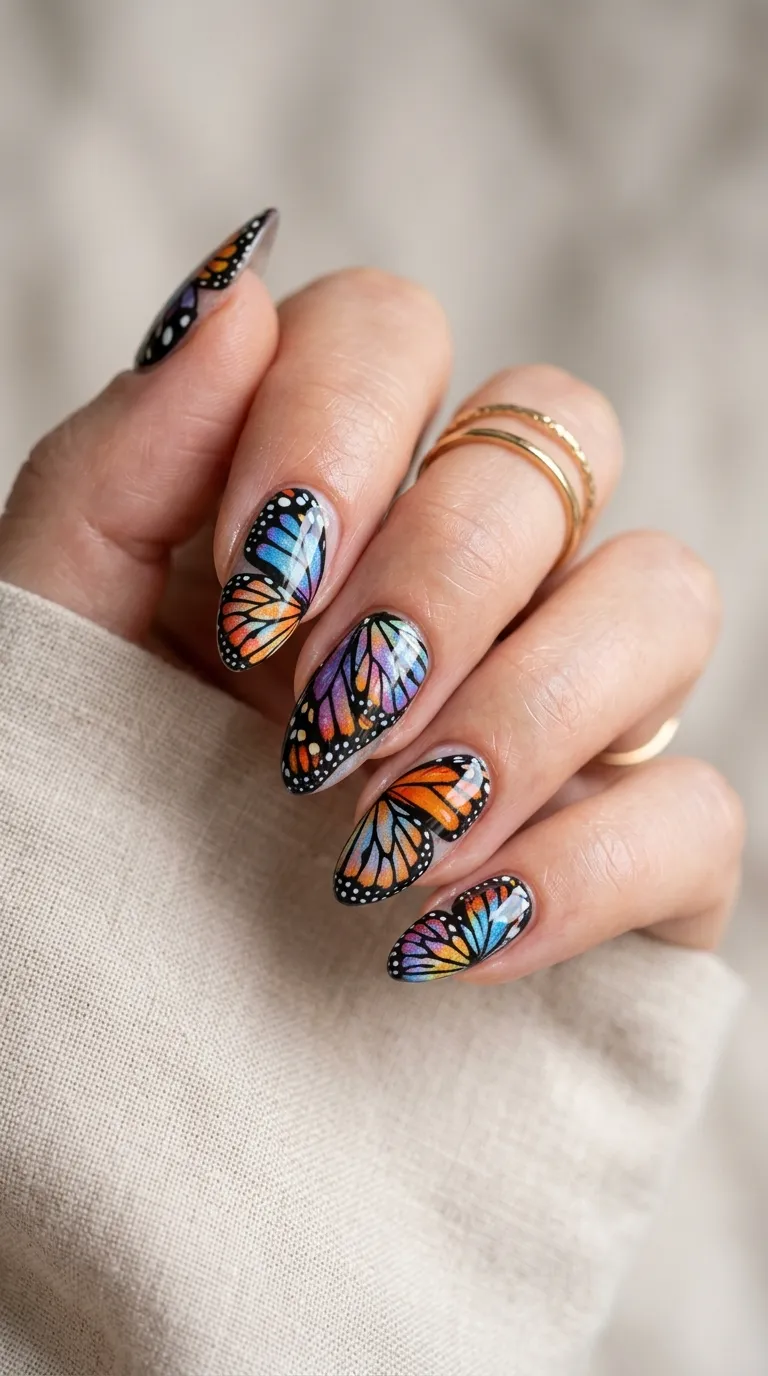
Detailed botanical illustrations drawn in fine lines over a neutral or dark base are one of the most refined fall nail art options available. Think twigs, bare branches, pressed botanicals, or simplified leaf outlines drawn with precision. The fine-line technique gives the art a delicate quality that contrasts beautifully with the heavier, richer tones typical of autumn nails. This works exceptionally well as an accent nail on one or two fingers over a solid complementary shade on the rest.
4. Color Block Geometry
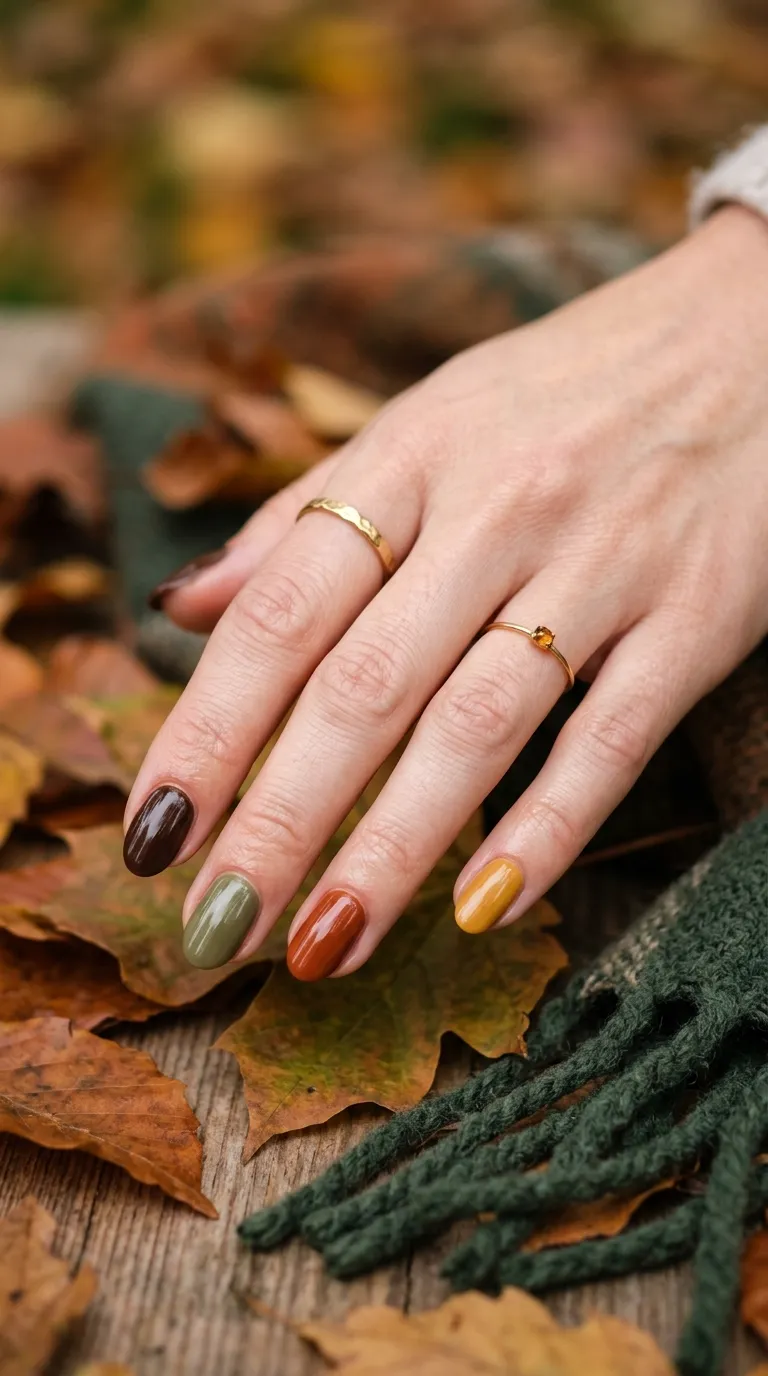
Geometric color blocking takes the bold color energy of fall and organizes it into clean, graphic shapes. A deep burgundy paired with forest green divided by a crisp diagonal line. A chocolate brown and dusty rose split horizontally at mid-nail. The precision of the shapes gives this look an architectural quality. It feels more design-influenced than traditional nail art and reads beautifully in both professional and creative contexts.
5. Marble in Mocha and Cream
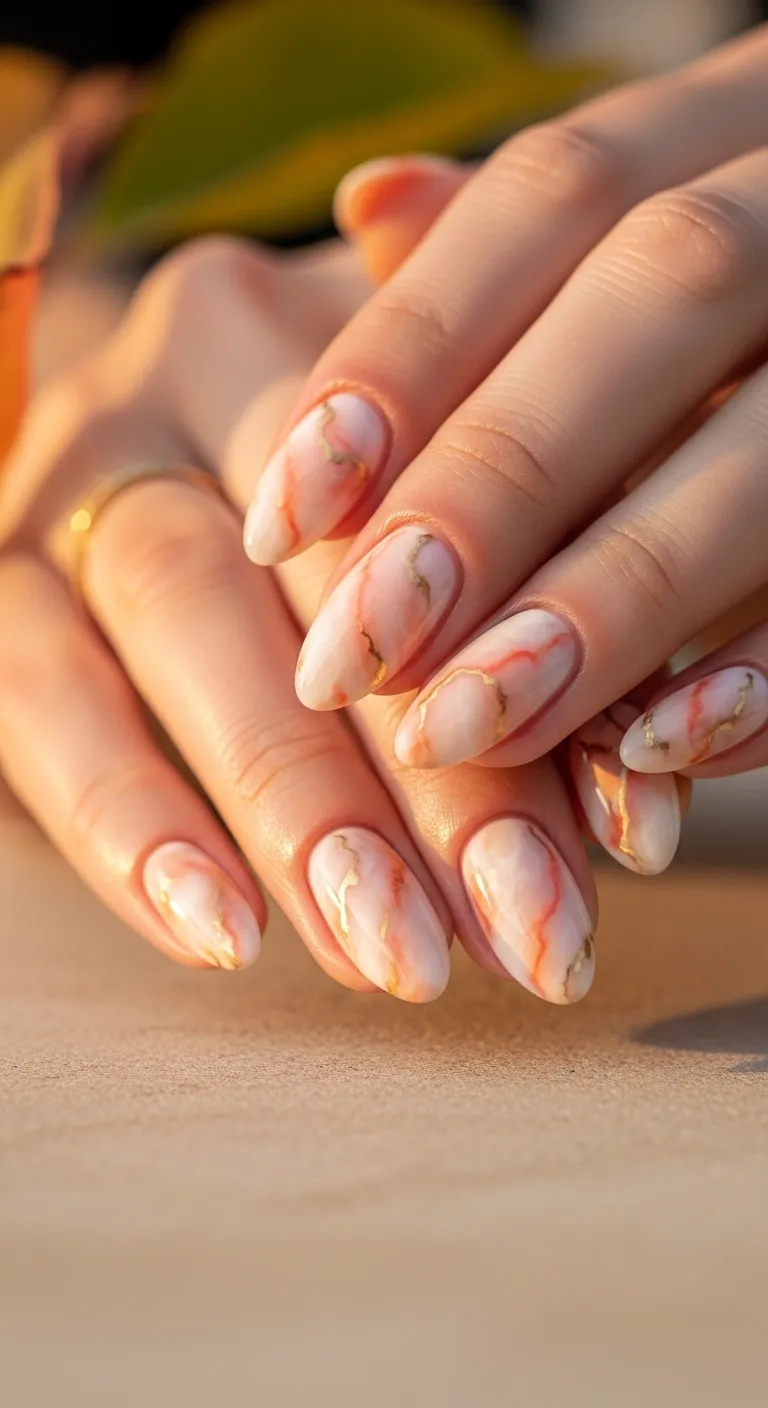
Marble nail art is not new but the mocha and cream version feels distinctly autumnal. Instead of gray and white, the veining runs through warm beige, camel, and cream tones with coffee-brown veins. The effect is warmer and cozier than classic marble while maintaining the same sophisticated, stone-like quality. Mocha marble nails look particularly beautiful with gold jewelry and brown leather accessories.
6. Foil Leaf Detailing
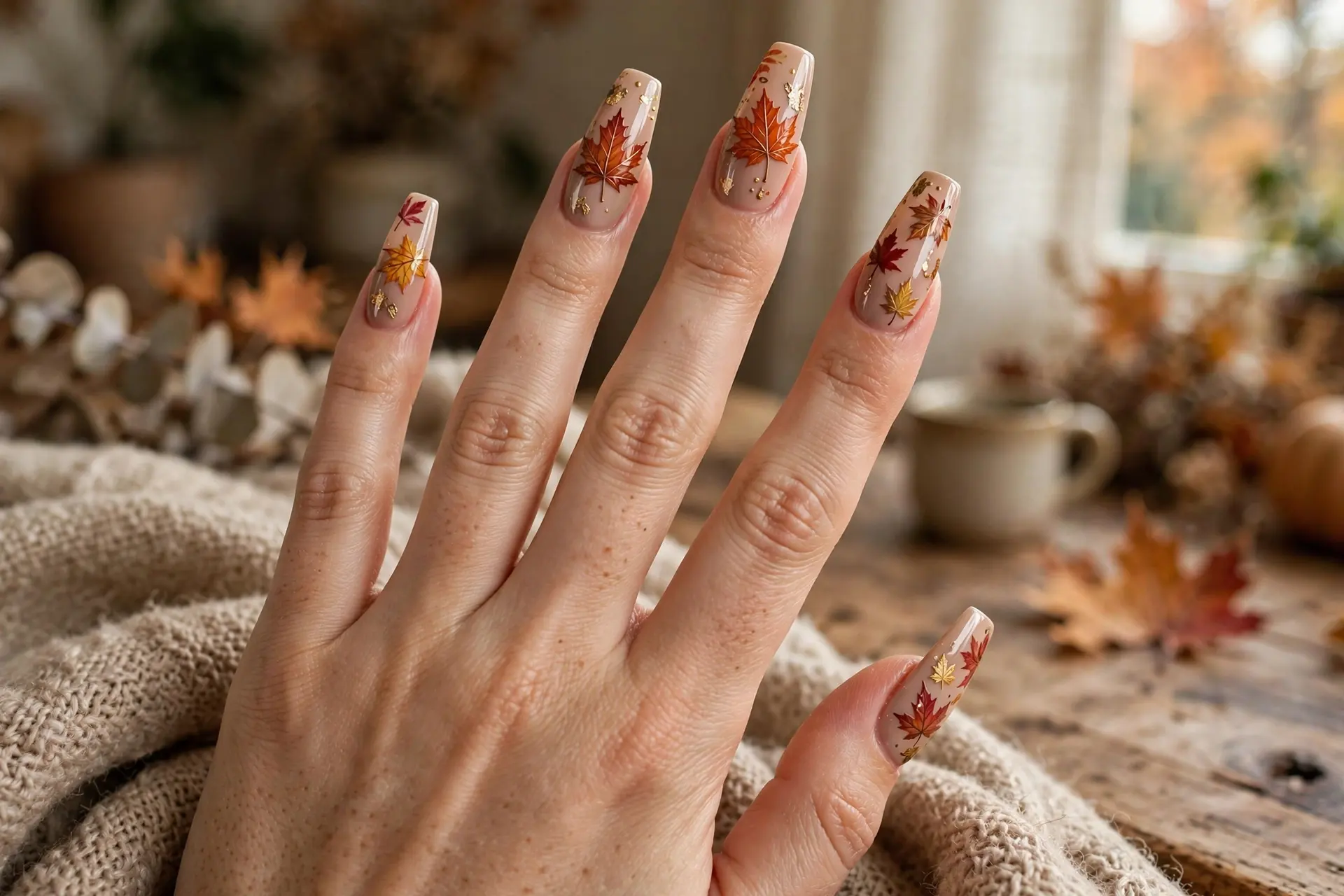
Gold foil applied strategically over a deep base color adds a textural element to fall nails that photographs beautifully and catches light in a way that polish alone cannot. The foil can be applied as an accent feature over one nail, used to create vein-like patterns, or layered under a translucent topcoat for a more subtle embedded effect. Over a deep plum, navy, or forest green base, gold foil feels rich and season-appropriate without verging on holiday.
7. Dried Flower Encapsulation
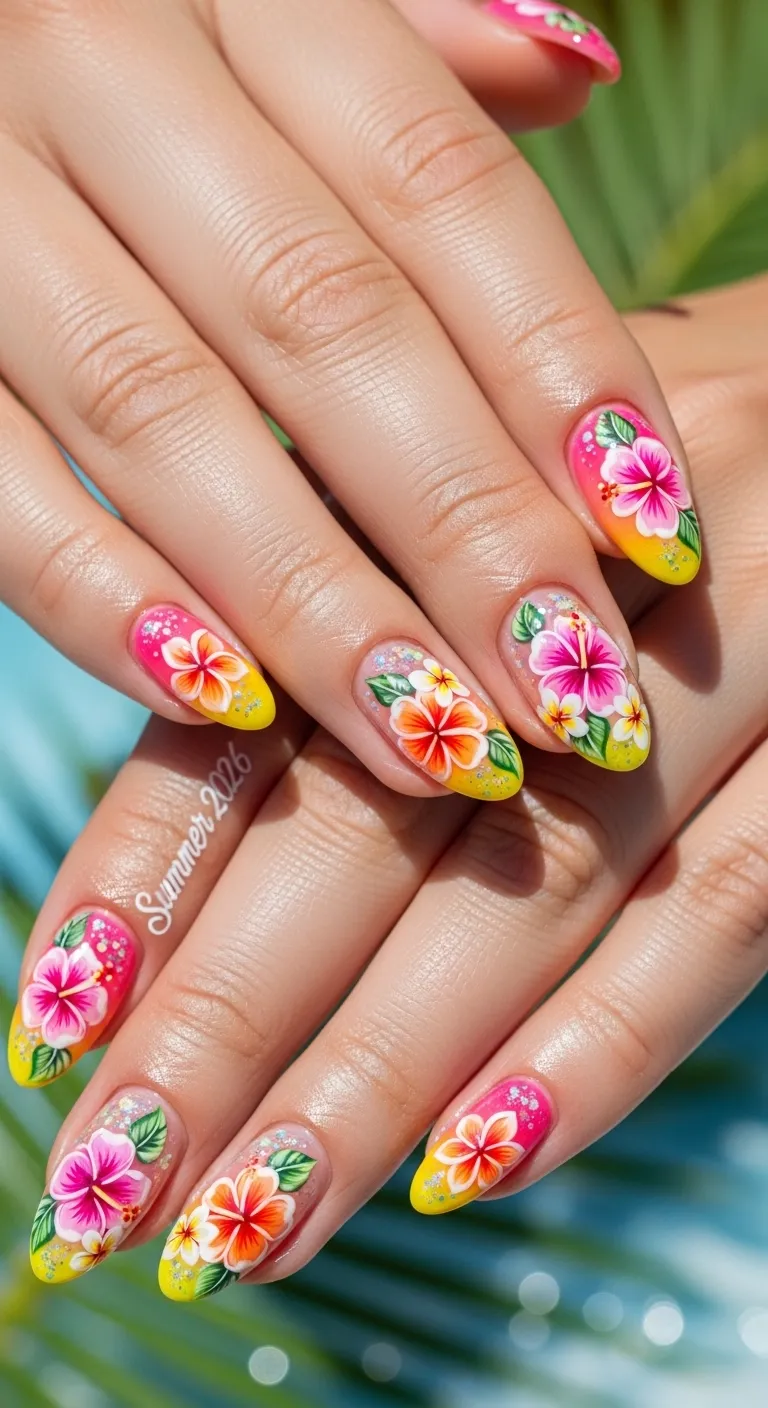
Pressed and dried miniature flowers embedded beneath a clear gel topcoat create a preserved-nature effect that is simultaneously delicate and dramatic. The flowers available in autumn tones include dried lavender, tiny chamomile, and pressed maple leaves that can be sourced from nail supply shops. This technique requires gel and a lamp to set, but the result is unlike anything polish alone can achieve. Each nail becomes a tiny terrarium.
8. Impressionist Texture

Inspired by the visible brushwork of Impressionist painting, this technique uses a stiff nail art brush to apply quick, directional strokes of color over a base, creating a texture that reads as movement rather than pattern. The colors are applied in complementary autumn pairings, rust over gold, plum over mauve, so the final result has depth and dimension that flat polish cannot replicate. Viewed at a distance, the nails appear as a rich solid color. Up close, the brushwork reveals itself.
Choosing the Right Fall Nail Art for Your Style
The most successful fall nail art is the kind that reflects genuine aesthetic preference rather than seasonal obligation. If your wardrobe tends toward the minimalist, fine-line botanical art or color block geometry gives you visual interest without clutter. If you lean maximalist, tortoiseshell, foil detailing, and encapsulated florals give you texture, depth, and genuine artistry to look at.
Think also about the length of time you want to dedicate to maintenance. Some of these techniques, particularly encapsulated flowers and detailed line art, look best when done by a skilled nail technician. Others, like abstract ink wash and foil accents, are achievable at home with basic nail art tools and practice.
Getting the Most Out of Fall Nail Art
Whatever design you choose, the base preparation determines how well the art lasts. Properly dehydrated and primed nail plates hold polish and gel better than ones that have been moisturized immediately before application. Clean cuticles and a smooth, buffed surface give any nail art design the clearest possible canvas. The effort put into preparation is always visible in the finished result.